Mindglad
How to Do Self-Hypnosis (A Simple Step-by-Step Guide)
Learn how to do self-hypnosis at home in 7 simple steps. A beginner-friendly guide to hypnotizing yourself for sleep, anxiety, cravings and confidence — safely.
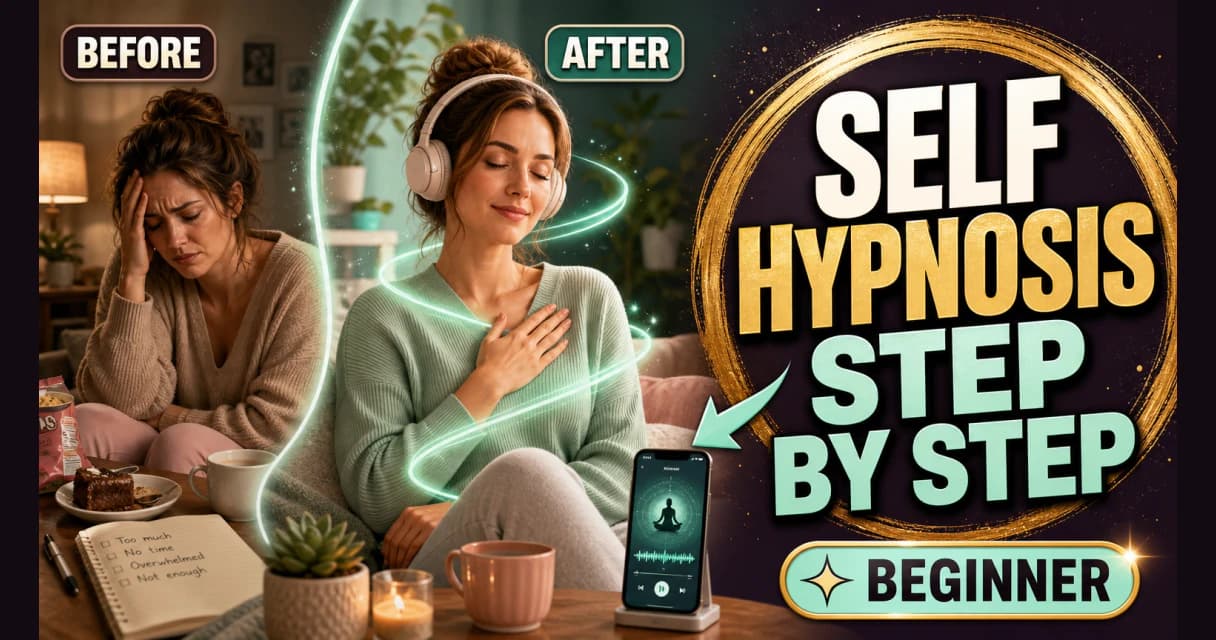
Self-hypnosis sounds mysterious, but it is really just a focused, relaxed state you guide yourself into on purpose — the same kind of absorbed calm you slip into during a long drive or right before sleep. In that state your mind is more open to gentle suggestion, which is why people use it to wind down, quiet anxiety, ease cravings, and build steadier self-talk. The good news: you do not need a therapist, a pendulum, or any special talent. You can learn the basics in a few minutes.
What is self-hypnosis?
Self-hypnosis is the practice of relaxing your body, narrowing your focus, and offering yourself calm, repeated suggestions toward a goal. It is not sleep, and it is not losing control — you stay aware the whole time and can stop whenever you want. Think of it as a structured way to talk to the quieter, more suggestible part of your mind, instead of leaving it to absorb whatever the day throws at it.
Does self-hypnosis actually work?
For many people, yes — within realistic limits. Hypnosis is used in clinical settings to support relaxation, sleep, pain management, and habit change, and research suggests guided suggestion can help shift automatic patterns like stress responses and cravings. It works best as a daily practice for everyday wellbeing, not as a magic switch. It is a support, not a substitute for medical care or therapy when you need them.
Is self-hypnosis safe?
For most people it is very safe. You cannot get "stuck" in hypnosis — at worst you drift off to sleep, which is hardly a problem at bedtime. You stay in control and aware throughout. If you live with a serious mental-health condition such as psychosis, talk to a professional first. Otherwise, the main risk is falling asleep before you finish, so do it sitting up if you want to stay awake.


How to do self-hypnosis: a step-by-step guide
Here is a simple, repeatable routine. The whole thing takes about 5–10 minutes.
1. Pick one clear intention
Decide on a single, positive, present-tense goal before you start — for example, "I drift off to sleep easily" or "I stay calm and steady." One intention per session works far better than a long list.
2. Get comfortable and remove distractions
Sit or lie somewhere quiet where you will not be interrupted. Silence your phone. If you want to stay awake, sit upright; if this is a bedtime practice, lying down is fine.
3. Relax your body (the induction)
Close your eyes and take a few slow breaths, making each exhale a little longer than the inhale. Then move your attention slowly from your forehead down to your feet, softening each area as you go — jaw, shoulders, hands, stomach, legs. This downward sweep is the classic way to ease into the state.
4. Deepen the state
Picture yourself gently going "down" — walking down ten soft stairs, or sinking into a warm, calm place — and count slowly from 10 to 1. Tell yourself that with each number you feel twice as relaxed. Slowing down is the whole point; there is nowhere to rush to.
5. Give yourself the suggestion
Now repeat your intention slowly and kindly, several times, as if it is already true: "Sleep comes easily to me… my body knows how to rest." Keep the words simple, positive, and in the present tense. Avoid "don't" — say what you want, not what you are leaving behind.
6. Picture it as already real
Spend a minute imagining the moment you want, in detail — falling asleep within minutes, staying calm in the meeting, letting a craving pass. The more vivid and sensory the picture, the more your mind treats it as a familiar, safe outcome.
7. Come back up gently
When you are ready, count from 1 to 5 and tell yourself you will return feeling calm, clear, and refreshed. Open your eyes. (If this is a sleep session, you can simply let yourself drift off instead.)
Simple self-hypnosis suggestions to try
- For sleep: "My body is heavy and calm. Sleep comes easily."
- For anxiety: "I am safe. My breath slows, and so does my mind."
- For cravings: "The urge rises, crests, and passes. I can wait it out."
- For confidence: "I trust myself. I can speak calmly and clearly."
Need a starting line? Pull one from our affirmations tool and use it as your suggestion:
Self-hypnosis for sleep, anxiety, cravings and confidence
Self-hypnosis for sleep
Bedtime is the easiest place to start, because you do not need to "come back up" — you can let the session carry you into sleep. Pair it with good timing: our free sleep calculator shows the best time to go to bed based on your sleep cycles, and a short wind-down handles the racing mind that timing alone can't. Build a free sleep plan matched to your nights.
Self-hypnosis for anxiety
For anxious moments, slow breathing is the fastest on-ramp into a calm state — try a few rounds below first, then add your calm suggestion. For a daily practice that helps it stop coming back, build a calm plan.
Self-hypnosis for cravings
Hypnosis-style suggestion works on the habit loop underneath a craving — the automatic reach before you have decided. A short reset helps you pause and let the urge pass. Build a cravings reset plan.
Self-hypnosis for confidence
Rehearsing a calm, capable version of yourself in a relaxed state makes it feel familiar before the real moment arrives. Build a confidence plan.
Tips to make it actually stick
- Practise daily. Two minutes every day beats twenty minutes once a week. Suggestion works by repetition.
- Keep suggestions positive and present-tense. Say what you want to feel, not what you want to avoid.
- Don't try too hard. Straining breaks the calm. Let it be easy — there is no "deep enough."
- Same time, same place. A consistent cue makes the state easier to drop into over time.
The easier way: let a guide do the talking
Self-guiding works, but it asks you to relax and narrate at the same time. Most people find it far easier to follow a voice — closing their eyes and simply listening while someone leads them down. That is exactly what Mindglad does: short, gently-guided hypnosis-style sessions for sleep, anxiety, cravings and confidence, with read-along transcripts, right in your browser. Take the 2-minute quiz and get a free plan built around what you want to work on.
Self-hypnosis FAQ
Does self-hypnosis really work?
For everyday goals like relaxation, sleep, and easing cravings or anxious moments, many people find it genuinely helpful, especially as a daily habit. It is a wellbeing practice, not medical treatment, and results vary from person to person.
How do you perform self-hypnosis?
Set one clear intention, relax your body with slow breathing, deepen the calm by counting down, repeat your positive suggestion as if it is already true, picture it vividly, then count yourself back up. The 7-step routine above walks through it.
Is self-hypnosis dangerous?
No, for most people it is very safe. You stay in control and cannot get stuck. The main "risk" is falling asleep — fine at bedtime, so sit upright if you want to stay awake. If you have a serious mental-health condition, check with a professional first.
How long does it take to work?
Some people feel calmer the first time; lasting changes to habits or sleep usually build over a few weeks of daily practice. Consistency matters more than session length.
Is there a self-hypnosis app?
Yes — Mindglad is a browser-based app of short guided hypnosis-style sessions for sleep, calm, cravings and confidence, with no download and a free trial. Start with the quiz to get a plan matched to you.
Frequently asked questions
Is it possible to hypnotize myself?
Yes. Self-hypnosis is simply guiding yourself into a focused, deeply relaxed state and offering yourself calm, positive suggestions. Most people can learn it with a little practice — it feels much like a guided meditation.
What does self-hypnosis do?
It uses focused relaxation to quiet the busy, critical part of your mind so helpful suggestions land more easily. People use it to ease stress, sleep better, build confidence, or change a habit.
Does self-hypnosis really work?
For many people it is a genuinely useful tool for relaxation, sleep, and habit change, and it is backed by research in those areas. It works best with regular practice and realistic expectations — it is a wellbeing skill, not magic.
Is self-hypnosis safe?
For most people, yes — it is a gentle, self-directed relaxation technique you can stop at any time. Do not practise it while driving, and if you have a serious mental-health condition, check with a professional first.