Mindglad
Guided Meditation for Sleep (How to Fall Asleep Faster)
How guided meditation for sleep works, whether it helps, and a simple step-by-step sleep meditation you can do tonight to quiet your mind and fall asleep faster.
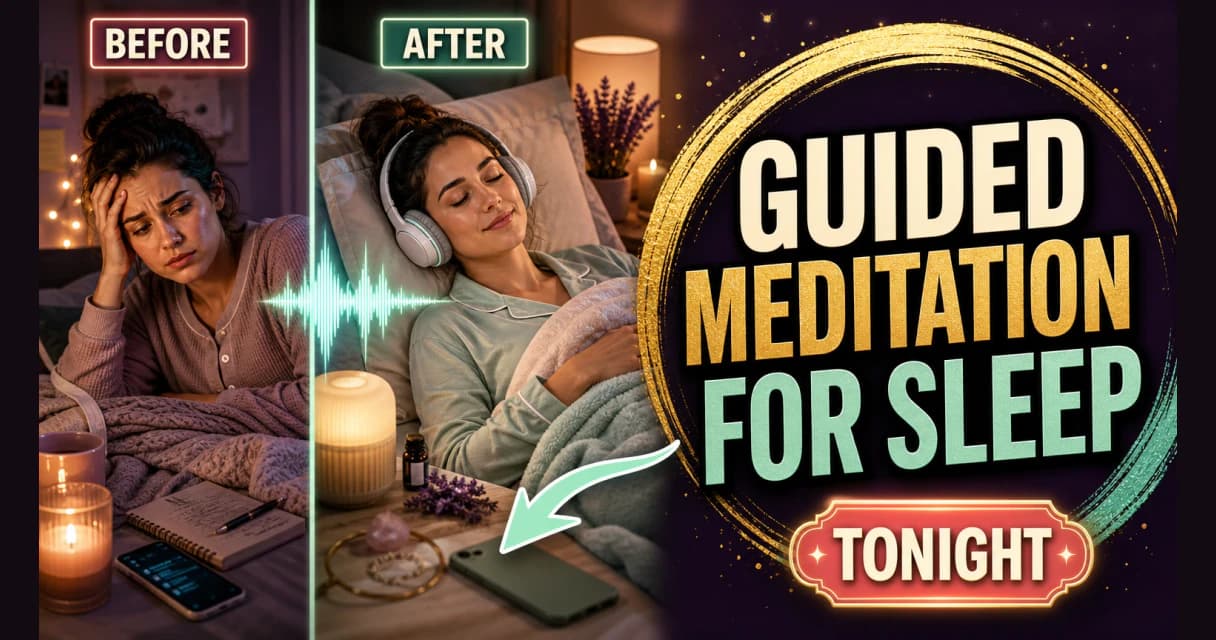
If your body is tired but your brain won’t cooperate, guided meditation for sleep is one of the gentlest ways to bridge the gap. Instead of trying (and failing) to force your mind blank, you simply follow a calm voice or a simple focus until sleep arrives on its own. Here’s how it works and a step-by-step meditation you can try tonight.
What is guided meditation for sleep?
Sleep meditation is a calming practice you do in bed to shift out of the day’s stress and into rest. "Guided" just means you follow something — a voice, a body scan, a breath count — rather than meditating in silence. That guidance is exactly what makes it work for racing minds: it gives your attention somewhere soft to rest instead of looping on tomorrow.
Does sleep meditation actually work?
For many people, yes. Relaxation and mindfulness practices are widely used to help with falling asleep, and they’re especially effective when the problem is a busy, stressed mind rather than a medical sleep disorder. Meditation lowers the body’s arousal — slower breath, looser muscles, a calmer mind — and once that "alert" signal fades, sleep follows naturally. It’s a supportive practice, not a substitute for medical care if you have ongoing insomnia or a condition like sleep apnea.

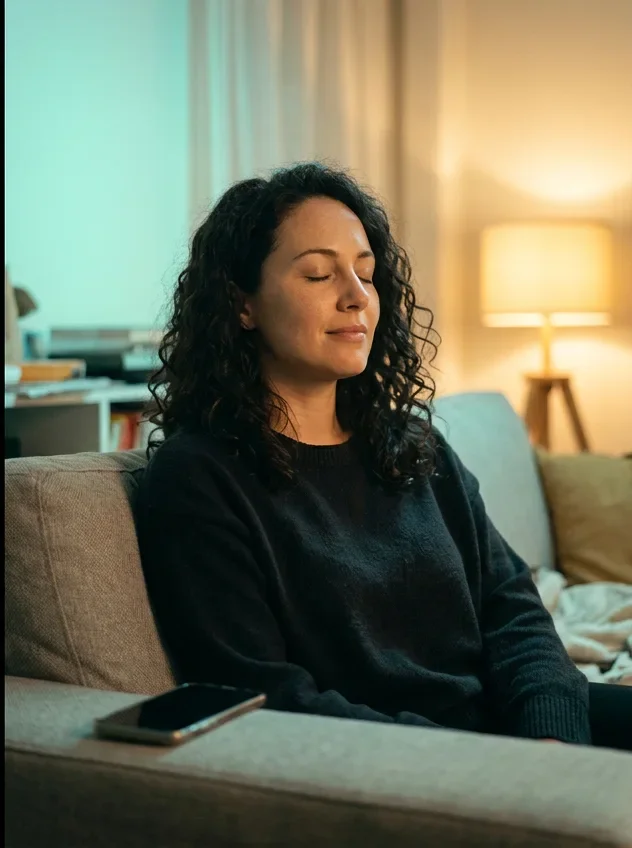
A simple guided sleep meditation to try tonight
Lie down comfortably, lights off, phone away. Then:
- Settle. Take three slow breaths, making each exhale a little longer than the inhale.
- Body scan. Move your attention slowly from the top of your head down to your toes, softening each area as you pass it — forehead, jaw, shoulders, arms, chest, stomach, legs, feet.
- Breathe and count. Breathe naturally and silently count each exhale from 10 down to 1. If you lose count, gently start again — losing count is fine, even good.
- Let thoughts pass. When a thought appears, picture it drifting by like a cloud and return to the breath. You are not failing; noticing and returning is the practice.
- Drift. There’s no finish line. Let yourself sink and fade — you don’t have to "complete" anything.
A few slow paced breaths first make it easier to drop in. Try the 4-7-8 pattern below — it’s designed for sleep:
Types of sleep meditation
- Body scan: systematically relaxing the body, great for physical tension.
- Breath-focused: following slow breathing, best for a racing mind.
- Visualization: imagining a calm, safe place in sensory detail.
- Guided audio / hypnosis-style: following a voice that leads you down — easiest when you’re too tired to guide yourself.
Not sure how meditation differs from hypnosis here? We break it down in does sleep hypnosis actually work — in short, meditation trains open awareness, while hypnosis more directly suggests sleep, and a good wind-down often blends both.
Tips to make it work
- Don’t chase sleep. The goal is relaxation; sleep is the by-product. Trying hard keeps you awake.
- Same routine nightly. Repetition turns the practice into a sleep cue your body recognises.
- Get the timing right. Going to bed wired and too early backfires. The free calculator below shows the best bedtime for your sleep cycles.
- Pair with breathing. A few rounds with our breathing tool (try 4-7-8) is a fast on-ramp into the calm state. For a deeper dive into bedtime breathwork, our sister app ClearBreaths has a free guide to deep breathing for sleep.
The easiest way: follow a voice
Guiding yourself while also trying to relax is hard at midnight. It’s far easier to close your eyes and follow a calm voice. Mindglad’s guided sleep sessions do exactly that — short, gentle wind-downs with read-along transcripts that quiet a racing mind, right in your browser with no download. Build a free sleep plan matched to your nights.
Sleep meditation FAQ
How long should a sleep meditation be?
Anywhere from 5 to 30 minutes. Shorter is fine — you can also just let it carry you to sleep partway through.
Is it bad to fall asleep during meditation?
Not for sleep meditation — that’s the point. (For daytime focus meditation, you’d sit up to stay alert.)
Do I need music?
No. Some people like soft ambient sound; others find a calm voice or silence works better. Try both and see what settles you. If ambient sound is your preference, Lumenstate — another app we build — plays slow, wordless sleep music designed to fade into the background.
Meditation or sleep hypnosis for sleep?
Both help. Meditation trains gentle awareness; hypnosis more directly suggests heaviness and sleep, which many find easier with a racing mind. See our sleep hypnosis guide.
Frequently asked questions
Does guided meditation help you sleep?
Yes — a guided sleep meditation gives your mind a calm, single thing to follow instead of racing thoughts, and the slow pacing relaxes your body toward sleep. Many people fall asleep before it ends.
What is the best guided meditation for sleep?
Look for a session with a slow, soft voice, gentle pacing, and a body-scan or long-exhale breathing focus. Used lying down in the dark, that combination is what eases most people off to sleep.
Can meditation lower cortisol?
Research suggests regular meditation can reduce cortisol, the stress hormone that keeps you wired at night. Lower evening arousal is part of why a calming practice helps with sleep.
How long should a sleep meditation be?
Anywhere from 10 to 30 minutes works well — long enough to fully relax, and it does not matter if you drift off partway through. The goal is to fall asleep, not to finish.